The Introvert’s Guide to Leaving Parties Without Anyone Noticing
Perfecting the art of the ‘Irish Exit.’

The worst part of any social gathering is leaving.
I know this might seem strange, as you probably assume us introverts look forward to leaving. And we do. But as excited as I am about being away from all the people, I dread the process.
I don’t want to interrupt conversations just to awkwardly say goodbye, or wave to people and invite questions about why I’m leaving so soon. I just want to be gone, like the wind. No hi, bye nonsense.
What’s wrong with that?
My Superpower is the Irish Exit
While extroverts are out here collecting new best friends and swapping Instagram handles at every party, I’m in the corner plotting the best escape route. In fact, that’s what I start planning as soon as I get there. My number one thought is:
How do I leave in the most inconspicuous way?
Now, don’t get me wrong; I don’t hate people. I just hate being around them for more than a few hours. My social battery can only take so much, and my anxiety exhausts me. I’ll do the social things I need to do, but there’s an invisible timer in my head that starts the moment I walk in. And when it hits zero, my mind quietly packs up and leaves, whether my body is ready to follow or not.
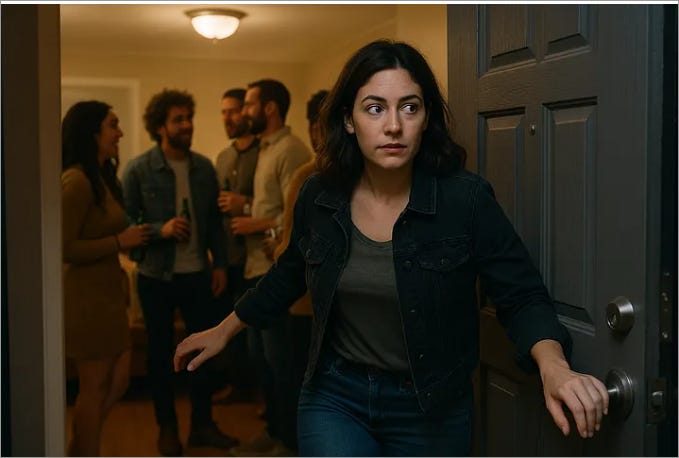
Over the years, I’ve perfected the art of disappearing. Sometimes it’s a “bathroom trip” that ends in my Uber app. Sometimes it’s waiting for the perfect distraction, like when everyone sings “Happy Birthday,” to slip out into the night. And then I just… vanish.
This is the Irish Exit.
Why is it called that?
It actually started out being called the French Exit, but they got offended by the phrase, so it switched over to Irish Exit. Most countries have their own name for this, but it all means the same thing:
Leaving a social gathering without saying goodbye.
The funny part is that no one really notices. Or if they do, they casually mention it the next day: “Wait, did you even say goodbye?” Or my favorite, “I didn’t even notice you left.”
Cool, yeah, that’s the point.
Goodbyes Are the Hardest Part of the Social Event
Let’s pretend, for a moment, that I was an extrovert. If I left the party by announcing my departure, then it would surely add an hour or two to my exit.
Goodbyes take a long time!
You tell one person ‘bye!’ and suddenly people reach out for hugs, as if it’s the last time they will see you again. (They know me too well…) Then comes the flurry of pleasantries, like “Let’s do this again soon!”.
By the time you’ve made it around the room and to the door, it’s midnight, and you’re more drained than if you’d just stayed until the end.
For an introvert, those goodbyes are more exhausting than the party itself. Which is why many of us choose the stealthy exit.
The Social Battery Problem
Psychologists often talk about the concept of a “social battery,” a mental energy reserve that fuels our ability to interact with people. Extroverts recharge their battery by being around others. Introverts slowly feel our battery bar drop to red as the night goes on (APA).
Once it’s empty, no amount of free chips and salsa is going to bring it back. And that’s usually the moment I decide:
It’s time for my exit.
The Irish Exit Playbook
You want to leave quietly without anyone noticing? Whether you’re an introvert or not, I’ve got some tips for you.
Here’s what to keep in mind:
Timing is everything. Slip out during a toast, a birthday song, or a loud commotion. These are the best times, as no one’s looking at the door. No one but you…
Avoid the coat trap. Never grab your jacket when the room is quiet. Zipping up your coat or trying to gather your belongings will draw too much attention.
Don’t linger by the door. It arouses suspicion. Move fast like you’re Usain Bolt. No one should notice anything.
Carry yourself with confidence. Look like you’re supposed to be leaving. No one questions confidence. Maybe you already told people you were leaving, who knows?! Act “normal.”
Do it right, and you’ll be home in pajamas before anyone texts, “Hey, where’d you go?”
Is It Rude Or Just Honest?
Some people see leaving without a goodbye as rude. I see it as self-preservation.
Extroverts thrive on long goodbyes because it’s more connection, and it prolongs their having to leave. Introverts dread them because they require more energy when we’re already on battery-0.
And if you think about it, isn’t it more polite to disappear than to hang around with a glazed-over stare, wishing for escape?
I think so.
The Aftermath: Peace at Last
The best part about the Irish exit isn’t the leaving part so much as it’s the arrival. Arriving home to the sweet, sweet quiet. The small talk and expectations are finally over.
That moment when you trade party shoes for pajamas is my idea of Heaven.
And if we’re being honest, nobody misses you as much as your mind tells you they do. Chances are, by the time you leave, half the room is too busy drinking, laughing, or posting blurry Instagram stories to realize you left or not.
If you did it correctly, no one should even notice you went missing.
Acceptance is Bliss
So yes, I am a chronic Irish exiter. I’m a master of the stealth disappearance; a ghost in the night.
I’ve made peace with the fact that my party legacy won’t ever be “life of the party,” but instead, “where is she, did she leave already?”
For introverts, we don’t have much time left after battery-0 before we start to feel cranky and annoyed, so it’s in everyone’s best interest to let us go.
And if you thought you saw us trying to leave, no, you didn’t.

What’s your typical exit strategy? Are you a hug-everyone-twice type of person, or do you also do the Irish Exit?
Share in the comments!
I’m Sarah, a writer and data analyst, and I post about data, careers, life, and everything in between.